

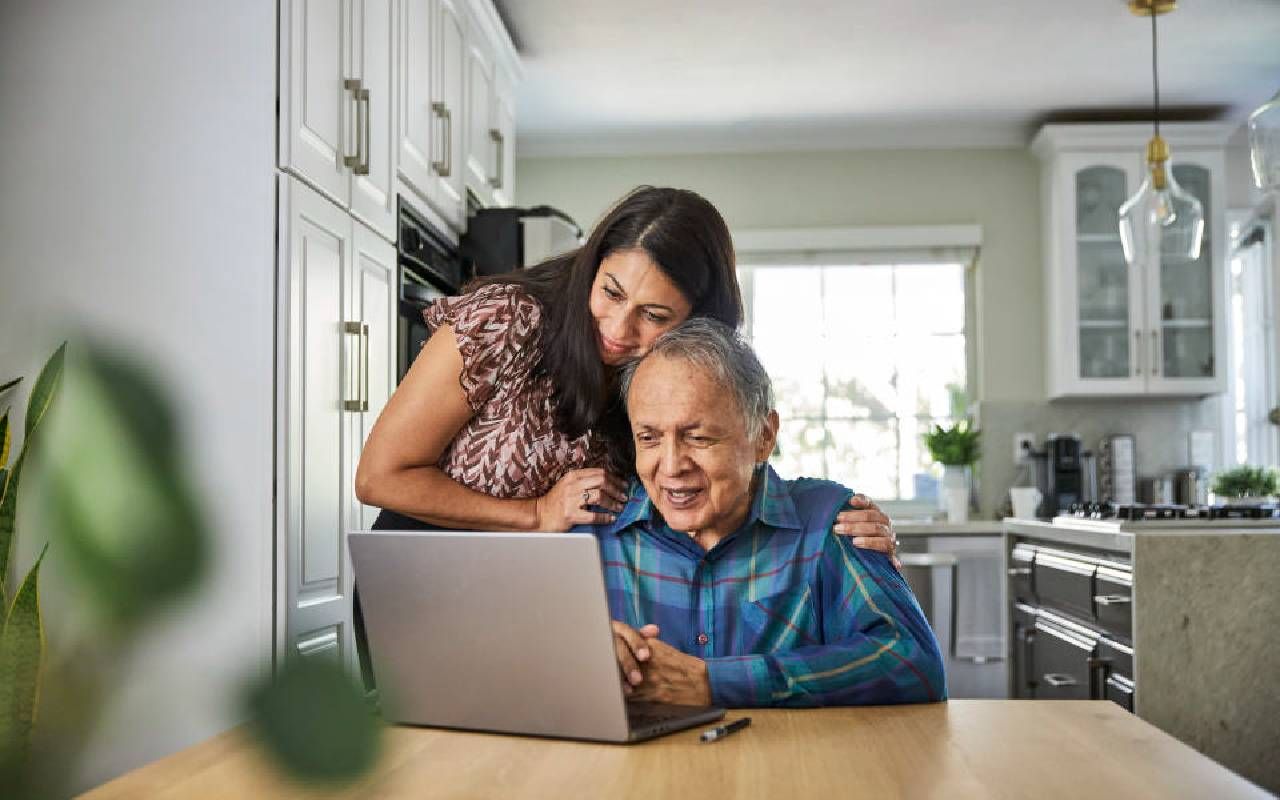
I have never doubted my dad's capability. He immigrated to the United States from Iran when he was 26, and went on to complete his bachelor's degree and navigate a career as an engineer. His life has in many ways typified the American dream.
However, when I first learned of his suspected Alzheimer's diagnosis, one of my immediate concerns was how his experience as an immigrant might impact his medical care. No matter how proficient in English he was, or how long he had lived here, this was not his primary language or culture.
Recently I joined him at an appointment for the first time, a preliminary meeting to discuss his potential participation in a research study. They asked me if I had noticed any decline, and I admitted it would be hard for me to spot. I am accustomed to my dad having to reach for a word, or simple mispronunciations. As I listened to him trip over repeating a phrase, I knew that was not necessarily unusual or a sign of cognitive decline.
The prospect of having an interpreter present for a second neuropsychological evaluation was brought up but never followed through by either the doctor or my dad, and when I asked the doctor at this most recent appointment, he regarded the use of an interpreter as something possible but not necessary. It made me wonder about the validity and accuracy of the assessment.
“Now I worry how that language gap between us will impact communication as his illness progresses.”
As someone with a background in social work, I was trained to understand the importance of cultural competency and look for the ways its absence could impede services. A 2022 systematic review and meta-synthesis of qualitative studies concluded, "A lack of culturally appropriate dementia services, language barriers and dementia stigma can impede access to dementia care for older immigrants."
The overview was helpful, but it didn't offer specific guidelines, so I reached out to the Rev. Katie Norris a Montessori-based dementia care specialist for her professional perspective.
"I think the first thing is to figure out language as early as possible," she stresses. "I feel like language has been one of the regular big barriers." She encourages family members to think about their fluency, both written and verbal. "Sometimes people are fluent, speaking, but not with reading or writing. And you really want to know, 'Where might I need some more language education so that I can support my loved one long-term?'"
She explains that written signs are helpful and often used in dementia care, and it's important to be able to communicate with the loved one in their native language.
“Most mornings when I wake her up, she's speaking German, reverting back to German more so throughout the day.”
Brigitte Mendoza, owner of Lone Star Market Research, who is caretaker for her 89-year-old mother with Alzheimer's, also reiterates the importance of language. Her mother immigrated to Canada and then the United States. As a 9-year-old girl, she fled with her family from East Prussia to Germany.
"Most mornings when I wake her up, she's speaking German, reverting back to German more so throughout the day. We're lucky that we're not in a facility. It would be a big problem because they wouldn't be able to understand her," Mendoza says.
New Research
Though lagging behind, new research is starting to emerge about Alzheimer's in immigrants and address some disparities. Of course, immigrants are not a monolith, and consideration needs to be given to their complex backgrounds.
As a review article following the Latinos & Alzheimer's Symposium summarizes, "Special attention needs to be given to many factors, including the heterogeneity within Latino populations, not only with respect to country of origin, but also education, genetic ancestry, socioeconomic factors, years of acculturation, migration history and perceptions of AD and dementia."
One unique approach that has emerged is Webnovela Mirela, a collaboration between Stanford University and the Alzheimer's Association. Developed specifically for caregivers of Spanish-speaking individuals with dementia, both the online telenovela and program guide (in both English and Spanish) are available for free.
Pilot studies looking into "Our Family Journey," a program geared towards Vietnamese American dementia caregivers, and a skill-training DVD program for Chinese American dementia caregivers also have shown promise.
“If you see something happening, never say the thing is happening just because it's dementia. There's always a reason. It could be a cultural difference.”
Rituals and Routines
In addition to language, Norris encourages getting to know the "rituals, routines and cultural customs that your loved one has. They may not have them now, but they may want what they did as a kid." She suggests talking to siblings or extended family members to learn more about what the loved one did as a child.
An example she shared was someone reverting to eating with their hands. If caretakers or the care facility know that was a common custom growing up, it helps them to understand instead of forcing the person to eat with a utensil.
"If you see something happening, never say the thing is happening just because it's dementia. There's always a reason. It could be a cultural difference," she elaborates. Other common situations she shared were bedtime routines, washing, toileting and hair care. "The stigma against many cultures is a lack of understanding in knowing some of the differences and the stigma against accommodating."
Culture Matters
Peter Trinh is director of the short film "GAPS" about the impact of Alzheimer's on the Asian American and Pacific Islander (AAPI) community, which addresses everything from the importance of cultural understanding, and filial piety, to stigma of the disease.
Trang Tru, a Vietnamese American advocate and full-time caregiver for her mother with Alzheimer's, summarizes the intersection immigrants and their caregivers face: "Having all these cultural challenges makes it that much more difficult. Having, on the one hand, folks on the Vietnamese side, friends, family, people she interacts with, not understand the disease, but then on the other side having mainstream, the system and mainstream providers not understand the cultural needs, it's this double whammy, and it's exhausting to be in the middle."
“It's this double whammy, and it's exhausting to be in the middle.”
In considering caretaking options, Mendoza says her culture also played a strong influence with her mother, "The tendency in Germany is more to keep loved ones at home."
After the appointment, my dad and I went out for lunch, where we discussed the appointment, and I tried to steer the conversation toward future care. Though born and bred in the U.S., as the oldest daughter, I empathize with caretakers like Tru and Mendoza, while also feeling strong motivation to pursue care that is most culturally aligned with my dad's Persian heritage.
My dad did not grow up with aging grandparents, and he's spent decades navigating life in independence from his family of origin. What we are left with is an uncharted path, so I do what comes instinctively as someone with an immigrant parent, what has been trained in me as a social worker, and look to others for their experience and guidance.
Recently, we learned a preliminary reading of my dad's amyloid PET scan did not show signs of beta-amyloid plaques. We are still waiting on the official results, but it calls into question the Alzheimer's diagnosis my dad received over a year and a half ago. It pulls us back to the beginning of trying to determine the source of his symptoms, and the potential misdiagnosis is a reminder of how much more research needs to be done in diagnosing, especially for immigrant populations.